Some of us have been defining the great novel, El Olvido que Seremos (translate to English as Oblivion: A Memoir or Memories of My Father), as a long love letter from a son to his father. These days, the author of that endearing work presents his readers with a testimonial document, several books in one, Ahora y en la Hora (literal…
Life, a Moment. Review of the book Now and in the Hour (Ahora y en la hora) by Héctor Abad Faciolince.


Preliminary note: This literary review was originally published in Spanish in the newspaper El Correo del Golfo, where the author publishes a weekly column under his given name (Dixon Moya) an in this Blog: https://blogs.elespectador.com/actualidad/lineas-de-arena/la-vida-un-instante-a-proposito-del-libro-ahora-y-en-la-hora-de-hector-abad-faciolince/
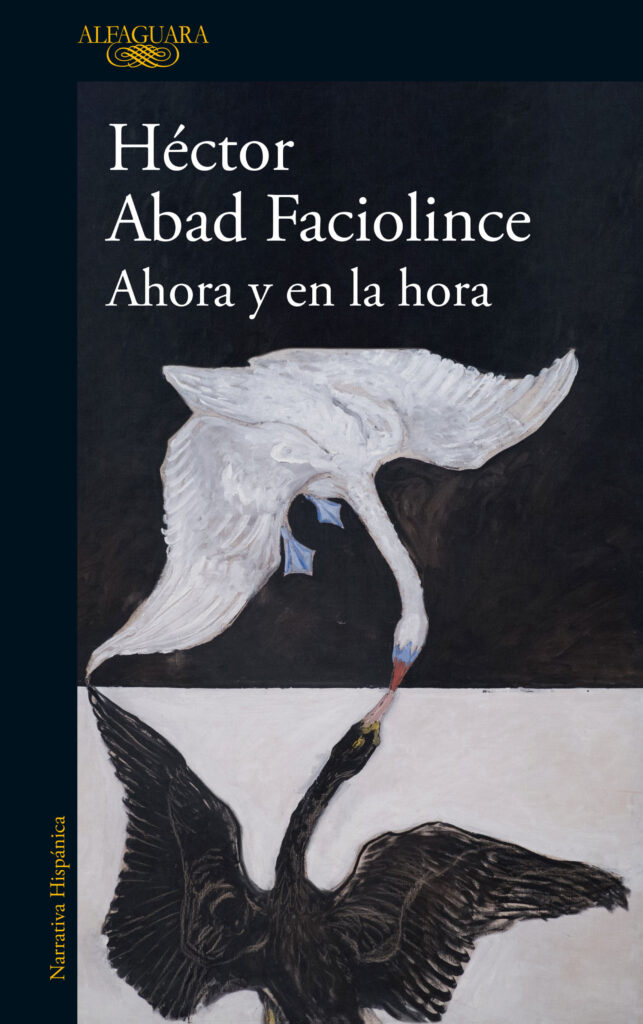
Some of us have been defining the great novel, El Olvido que Seremos (translate to English as Oblivion: A Memoir or Memories of My Father), as a long love letter from a son to his father. These days, the author of that endearing work presents his readers with a testimonial document, several books in one, Ahora y en la Hora (literal translation is Now and, in the Hour, but I don’t know an official translation), which could be described as a father’s testament of love to his children, his wife, and friends. A different text from the first, Héctor Abad Faciolince once again moves the reader’s soul.
This book is not only a testimony of solidarity and affection for a just cause, that of Ukraine, whose population has suffered the invasion and constant attacks of the powerful Russian army following Vladimir Putin’s orders. In that sense, the author stands on the right side of history, as did those who exposed the Nazi Holocaust against the Jews, or those who now denounce the genocide of the Palestinian people by Benjamin Netanyahu’s government, as Abad Faciolince has also done.
Faithful readers of Héctor Abad always await a new novel from him, but this time he brings us a different book. Something that is not foreign to him, if we recall that Culinary treaty for Sad Women, which the author himself couldn’t define in its essence. In the case of Ahora y en la hora, it is a miscellaneous book, in which poetry appears as a special guest, at times managing to save what prose recognizes itself incapable of resolving. But it could also be seen as a penitent work, helping to offset the weight of guilt that torments the writer. A most unfair blame, because the author is not responsible for the event he describes, nor for human cruelty in general.
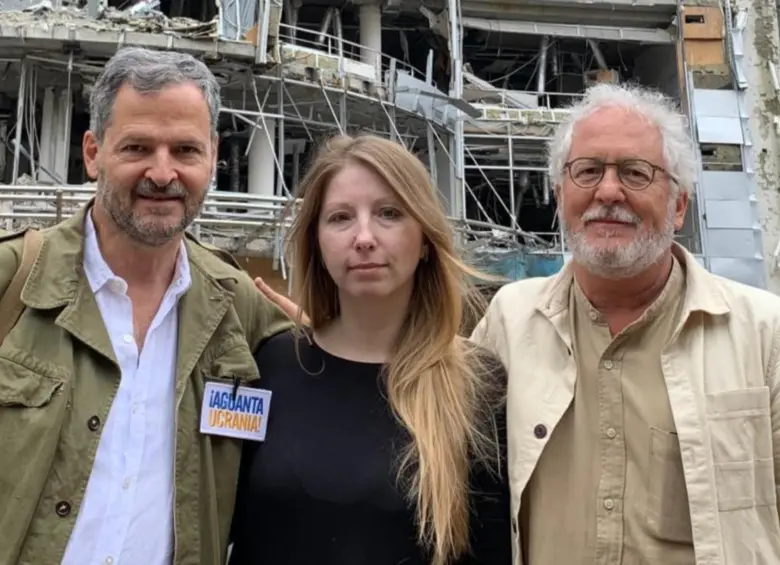
The best moment of this year’s Bogotá Book Fair, in my opinion, came during the conversation between two Colombian writers, Ricardo Silva Romero and Héctor Abad Faciolince, one from Bogotá and the other from Medellín, who share a common interest in the vast land of literature. In that delightful conversation, Héctor presented his book as the chronicle of a death foretold, because we already know about the death of the protagonist, the writer Victoria Amelina, who was killed along with twelve other people, including minors, by a Russian missile launched at a restaurant where only unarmed civilians were present. However, it is necessary to know the causes and details of the terrible event.
Héctor had changed seats at the table with Victoria moments before the attack, an event that saved the author’s life, but changed it forever. The book we’re discussing isn’t just about that terrible moment, which could be summed up in the anecdote of a survivor. No, it’s much more. It speaks about the history and stories that took place in Ukraine, but it also introduces us to authors who are Ukrainian or born in what is, was, or will be Ukraine, even those of other nationalities, such as the great science fiction author Stanislaw Lem, a survivor of the Nazi Holocaust. Victoria Amelina joins the list, who will surely become better known in our language after Abad Faciolince’s book, especially her novel Dom’s Dream Kingdom.
The text is also a reflection on writing in general and the reasons for its practice. In the case of Héctor Abad, he concludes that he writes for those he loves (children, wife, loved ones), not like García Márquez, who wrote so that his friends would love him more. In other words, two different ways of conceiving the act of literary creation with love. Writing and loving. It’s a book that invites dialogue; it doesn’t impose criteria, and I think the reader may disagree with some of the ideas expressed by the author, who doesn’t pose as a prophet or guru, nor as a hero.
The author insists on calling himself an old man who should have died in place of his younger colleague, Victoria Amelina, and he constantly reiterates what he calls his cowardice. I profoundly disagree with the author’s insistence on presenting himself as a coward; he isn’t, even though he does his best to convince us. Someone who presents himself with complete transparency, without pretending to be something he isn’t, without claiming to be a champion as others would have done, is not only an honest man, but also a brave one, in these deceitful and Trump-like times.
I also disagree with Héctor when he says there’s no blue sky like Madrid’s and compares it to Jericó and Carmen de Viboral, two endearing towns in Antioquia, a beautiful province whose capital is Medellín. That’s not true. There is no blue sky more beautiful than the one in Bogotá at the end of December and beginning of January. Most readers here will raise their eyebrows, shake their heads, and deny me. I understand them, because foreigners don’t usually come to Bogotá during these times, and most Bogotá residents leave the city, leaving those of us who stay behind with a wonderful gift. In general, everyone has an image of the gray or brown sky of my city, so they can’t even imagine it. Well, the truth is, everyone has their favorite blue sky.
In the final pages of the book, there is a profound reflection on death, one’s own and that of others, but especially that of those we love, the worst evil, as Héctor describes it. “Immortality must have been invented by a father who lost his son,” says a son who lost his father too early in life. What is the word for someone who has lost their children? There’s no such word in Spanish. Héctor wonders if it can be “deshijado” (de-sonified). The Spanish Federation of Parents of Children with Cancer has proposed “huérfilo” (orphile) to describe such pain, using the same Latin structure.
Héctor Abad wonders if any language has a word to describe the grief of parents who have lost their children. Indeed, dear Héctor, Hebrew and Arabic do have the words shjol and thaakil, respectively. These are peoples who are aware of this terrible meaning, especially since October 7, 2023, with the Hamas terrorist attack on the Israeli civilian population and the genocide unleashed by the criminal government of Benjamin Netanyahu against the Palestinian people of Gaza.
As a Colombian diplomat, I believe that an act of justice and solidarity would be to open a Colombian embassy in Kyiv in the future. Not only have our country expressed its affection for Ukraine through figures like Sergio Jaramillo (founder of the #AguantaUcrania movement) and the author himself, but hundreds of Colombians have participated in the so-called International Legion. Although it’s a complex issue, it nonetheless involves the interests of compatriots in the conflict. If I may make a recommendation, I think the best ambassador would be Héctor Abad Faciolince, although he certainly wouldn’t accept it if the remote possibility arose.

I hope one of the first translations of this book will be into Ukrainian, hopefully through Compás Publishing House, that was originally called Macondo, a name so close to Colombians. Surely well received by Ukrainian readers, this book is several in one: a chronicle of a moment, but also a biography of brave people fighting for peace, an elegy of a heroic people facing the giants of the Earth, all of them represented by a martyred writer.
Human beings come into this world at a certain time, on a certain day, month, and year, just as we will depart at an uncertain time in the future. Life is an instant, or as another universal Paisa, Juan Esteban Aristizábal, better known as Juanes (famous Colombian singer), said, “Life is a little while,” as his mother used to say. Readers should keep this book on their bedside table. In any case, never miss it, because it’s never superfluous, the prayer that moves even agnostics, “Now and at the hour of our death… Amen.”
Dixon Acosta Medellín
On Twitter, you can find me as @dixonmedellin, and I explore the blue sky on Bluesky as @dixonacostamed.bsky.social

Comparte tu opinión

 Loading…
Buscar en Blogs
Blogueros notables
Mas votados


Todos los Blogueros
- CastroOpina
Por @castroopina
- Los que sobran
Por @Cielo _Rusinque
- Coma Cuento: cocina sin enredos
Por @ComíCuento
- Tenis al revés
Por @JuanDiegoR
- A calzón quitao
Por A calzón Quitao
- La Guía Astral
Por ACA
- Lloronas de abril
- El Peatón
Por Albeiro Guiral
- Unidad Investigativa
Por Alberto Donadio
- Detrás de Interbolsa
Por Alberto Donadio
- Alejandro Pinto
Por Alejandro Pinto
- Cura de reposo
- ¿Se lo explico con plastilina?
Por alter eddie
- Un Blog para colorear
Por Alvaro J Tirado
- Voces por el Ambiente
- Catrecillo
- Relaciona2
Por ANDREA VILLATE
- Zona Mixta
- Bike The Way
Por Andrés Núñez
- Ventiundedos
- El invitado
Por antojarcu
- Ese extraño oficio llamado Diplomacia
- La tortuga y el patonejo
Por Baba
- Bajolamanga.co
Por Bajolamanga
- 300 GOTAS
Por Bastián Baena
- Con-versaciones
Por Bat&Man
- Corazón de mango
- Mi Opinión
Por Ben Bustillo
- Bernardo Congote
Por Bernardo Congote
- El Hilo de Ariadna
- El Río
Por Blog El Río
- Un Punto de Cruz
Por buscobeca.com
- Mirabilia
- Cara o Sello
Por Caraoselloblog
- Dirección única
- Media & Marketing
Por Carlos Castillo
- Hundiendo teclas
- Colegio de Estudios Superiores de Administración
Por CESA
- La Sinfonía del Pedal
- Follamos, luego existimos
- Colirio
Por colirio
- Colombia de una
Por colombiadeuna
- El Mal Economista
Por columnistas eme
- Palabra Maestra
- Olas y Ecos
Por dafevid
- Mercadeando
- Filosofía y coyuntura
- En contra
Por Daniel Ferreira
- Claudia Palacio
- De Sexo Hablemos
Por desexohablemos
- De ti habla la historia
- Plétora
- Las palabras y las cosas
Por Diego Aretz
- Yo veo
- Tejiendo Naufragios
Por Diego Niño
- Líneas de arena
- Desde la Academia
Por Economia
- Destellos de un mundo en mutación
- It was born in England
Por Eduardo Ustáriz
- Cuestión digital
Por Edwin Bohórquez
- El Mal Economista
- El MERIDIANO 82
Por El meridiano 82
- ESTADO DE COMA
Por Eliana Samacá
- El Magazín
Por elmagazin
- La vaca esférica
Por eltrinador
- El Mal Economista
Por EME
- Otro mundo es posible
Por Enrique Patiño
- Actualidad
- Gramófono cultural
- Tolima-Tolimán
Por FabiolaH
- La agenda del CFO
Por Felipe Jánica
- Dos o tres cosas que sé de cine
Por fgonzalezse
- República de colores
- Más que fotos
Por Gabriel Aponte
- La Franja De Gaso
Por Gaso
- cafeliterario.co
- Embrollo del Desarrollo
Por Gudynas Eduardo
- Hernán González R
- Calicanto
- Humedales Bogotá
Por humedalesbogota
- Ecuaciones de opinión
- Internet pa’l diario
- El bosque es vida- IRI Colombia
Por IRI Colombia
- Meditaciones Absurdas
- Deporte en letras
Por Iván Gutiérrez
- Pazifico, cultura y más
- Conversar, Sentir y Pensar…. Desde el SUR
- Parsimonia
Por Jarne
- Ciudad Sostenible
Por Jen Valentino
- Más allá de la medicina
Por jgorthos
- George o nomics
Por Jorge Borrero
- La droga, ¿y Colombia?
Por Jorge Colombo*
- Hypomnémata
- Si yo fuera
- Utopeando │@soyjuanctorres
- Minería sin escape
- Políticamente insurrecto
- Cosmopolita
- Inevitable
- En segunda fila
- Actualidad
- AdverGlitch
- Sobrevivir a la Edad Media
- A la Palestra
- Ready player number two
Por JuanDLink
- lado oculto radio
Por ladoocultoradio
- La revolución personal
- Las Ciencias Sociales Hoy
- Ciencia para el buen vivir
- Liarte: diálogo sobre arte
- Una habitación digital propia
- Los perdidos
Por losperdidos
- En jaque
- Reencuadres
Por Manuel J Bolívar
- Putamente libre – Feminismo Artesanal
Por Mar Candela
- LA CASA ENCENDIDA
- Psicoterapia y otras Posibilidades
Por María Clara Ruiz
- Política
Por Maria MesaR
- Bienestar en tiempos de drones
Por Maria Pasión
- Desde el fogón
Por Maritornes
- Consideraciones políticas
Por Maylor Caicedo
- Ella es la Historia
Por Milanas Baena
- Mongabay Latam
Por Mongabay Latam
- Ojo de pez
Por Mónica Diago
- Nadimcomics
Por nadimcomics
- NTT DATA: Tendencias disruptivas y nuevos modelos
- Con los pies en la tierra
- Tributos y Atributos
Por OSWALDO PEÑA
- El telescopio
Por Pablo de Narváez
- PauLab Laboratorio Digital / Un clic hace la diferencia
- El Último Verso
Por pavelstev
- Lloviendo y haciendo sol
Por Pilar Posada S.
- Esto mejora, pero no cambia
- El poder de la tecnología: Cómo nos cambia
Por Rafa Orduz
- La conspiración del olvido
- Don Ramón, psicología laboral
Por ramon_chaux
- Coyuntura Política
- Corazón de Pantaleón
Por ricardobada
- Reflexiones
Por RicardoGarcia
- DELOGA BRUSTO
- Apuntes de Ciencia
Por Santiago Franco
- La Acción Política de Educarse
Por Santiago Muñoz
- La Perla
Por Sebastián Gómez
- Óscar Sevillano
Por Sevillano
- Solteras DeBotas
Por Solteras DeBotas
- La cuestión animal
Por Steven Navarrete
- Tareas no hechas
Por tareasnohechas
- Tíbet de Suramérica
- El Cuento
- Blog de notas
Por Vicente Pérez
- El Blog del Cerebro
- Derecho para todos
- Conspirando por un mundo mejor


Los editores de los blogs son los únicos responsables por las opiniones, contenidos, y en general por todas las entradas de información que deposite en el mismo. Elespectador.com no se hará responsable de ninguna acción legal producto de un mal uso de los espacios ofrecidos. Si considera que el editor de un blog está poniendo un contenido que represente un abuso, contáctenos.