The ideas of biologist and ornithologist Richard Prum are the central axis of this analysis. Prum is widely known for his research on the evolution of bird plumage, the mechanics of biological color, and evolutionary aesthetics. He currently serves as the William Robertson Coe Professor of Ornithology at Yale University and is Head Curator of…
What Birds Teach Us About Art and Aesthetics



The ideas of biologist and ornithologist Richard Prum are the central axis of this analysis. Prum is widely known for his research on the evolution of bird plumage, the mechanics of biological color, and evolutionary aesthetics. He currently serves as the William Robertson Coe Professor of Ornithology at Yale University and is Head Curator of Vertebrate Zoology at the Yale Peabody Museum.
For this bird expert, aesthetics is a biological phenomenon of great importance in the animal and plant worlds; art lies in the signals that living beings produce to attract those who will fertilize them. The colors, scents, and textures that flowers use to attract pollinators; the songs and dances of male birds to seduce females; and, in general, every kind of display in nature are all forms of art.
Prum argues that aesthetics is neither an invention exclusive to human culture nor a mere incidental by-product of evolution. Studying birds and plants, he maintains that animals and other biotic organisms take an active part in aesthetic processes driven by sexual selection and desire.
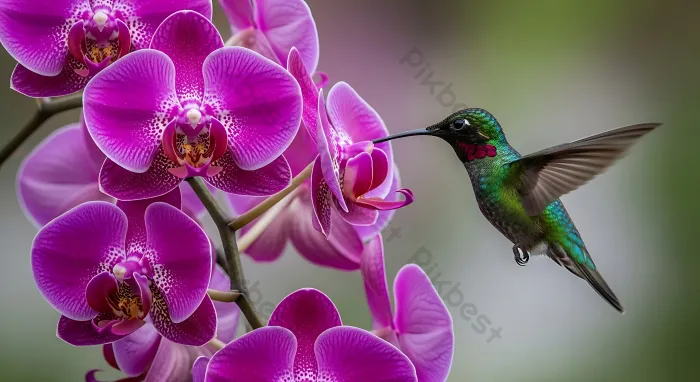
Aesthetics is the result of a coevolutionary process, in the human sphere as much as in the biotic one. This means that beauty and art forms arise and evolve through dynamic feedback between the producers or displayers of the traits (whether feathers, songs, flowers, or human works) and the brains that judge that information. A paradigmatic example is the relationship between hummingbirds and the flowers whose beauty and scent have evolved for them; in turn, the birds’ beaks and their susceptibility to being attracted evolve alongside. Beauty acts as the engine that ensures the survival and continuity of the species involved. When an aesthetic attraction or positive response occurs, the relationships between the senders and receivers of the signal become far more stable, nuanced, and deep. It is precisely these constant interactions that keep beauty evolving, diversifying, and active over time.
In the human world, the author points out that art is a form of communication that coevolves with the participation of aesthetic evaluators (judges, individuals, dealers, critics, galleries…) and with artistic production (works and performances). The dynamic interaction between creators and judges gives validity to some forms of expression over others, generating the criteria of taste and the changes in it. Collectors, audiences, readers, and critics play as active a role in this process of transformation as the artists, authors, and performers themselves.
For Prum, the world of art—both biotic and human—is not a static structure with closed borders but a dynamic process; in the human sphere, it is also a historical process. Art does not exist by being bounded within rigid frontiers, but through its capacity to endure in time and history with an identity of its own.
There are internal and external factors that drive these changes. Imitation among humans causes some art forms to spread around the world, a phenomenon also common in birds. Lawrence’s thrush, in the Amazon, imitates dozens of songs of other species, not to deceive, but to broaden its own acoustic repertoire and its aesthetic learning. Prum tells us in this regard:
“Song learning always involves a process of aesthetic evaluation of the available social tutors (usually conspecifics) and a process of vocal emulation that gradually converges on an individual adult vocal repertoire.”
“Polyglot reed warblers acquire a diversity of samples from the avian aesthetic cultures of eastern Africa, incorporate them into their own aesthetic repertoires, and import them, through annual intercontinental migrations, to perform them in the marshes of northern Europe […] Thus, imitative songs are aesthetic samples of the socio-sexual art world of the source species, incorporated into the socio-sexual art world of the imitating species.”
“Even among bird species with learned vocalizations (that is, with culture), there are documented cases of songs that have evolved toward higher frequencies in urban environments to avoid acoustic interference from city noise.”
In the worlds of human art, we see a constant interpenetration of different styles and realms. Classical music can draw inspiration from popular music, and vice versa. In ballet, we see how choreographies have gradually become interwoven with the dances of different cultures. Technology drives new forms of expression (photography, film, electric guitars, keyboards), and the same is true of new materials. Human beings make art out of whatever crosses their path. This is a point that Prum does not address and that, to me, seems significantly important.
Personally, I believe that human beings beautify, complexify, specialize, improve, and optimize in some direction whatever they find along their way; to those extraordinary objects and actions that rise above the norm we grant great social value, and we call them artistic. From my perspective, what defines the artistic is not aesthetics in itself, but optimization in a socially valuable direction. I agree with Prum that art and aesthetics are necessarily population-level phenomena—let us call them social—that can only be understood within the framework of the communities where they occur, persist, and change (the philosopher of art Arthur Danto thought likewise).
For me, beauty is one way of increasing the value of actions and objects, but it is not the only one; one can even do without it and still turn an object or an action into art. For Prum, by contrast, there is no art without beauty and no beauty without art. Although he is right to give great value to beauty, it does not manifest in exactly the same way in the human world as in the biotic one. Pleasant smells are not necessarily “beautiful,” but they are attractive and pleasurable. We human beings handle a broad repertoire of categories (I don’t know whether the same is true of animals), although it is worth noting that animals are attracted to what seems beautiful to them, and what seems beautiful to them is what attracts them.
Prum points out that for humans there are complex aesthetic categories—such as the ironic, the elegant, the heroic, or the kitsch—that depend on cultural meaning and context. Nevertheless, he maintains that beauty is the most powerful aesthetic value because it keeps the evaluators’ positive response alive, ensuring that the social relationship of artistic communication remains active, evolving, and resistant to the stagnation of purely “anaesthetic” or hyperconceptual art. For my part, I believe there are many additional aesthetic categories, such as order, style, complexity, rarity, novelty, originality, meaning, metaphor, evocative resonance, specialness, repletion, cohesion, prestige, and standing out above other objects of the same category.
I like it when Prum points out that abstraction, conceptual complexity, and opacity can be intriguing and attractive properties at a given moment, but not in the long term. “Anaesthetic” art, as he calls it, becomes a dead end because the absence or denial of sensory engagement numbs the social relationship with the communities of evaluators that necessarily drive aesthetic coevolution.
In conclusion, although I agree with Richard Prum that beauty and aesthetic coevolution drive the continuity of artistic expressions in both nature and human culture, my perspective broadens this framework by placing optimization and social whims as the true engines of the artistic; thus, art is not exhausted in the pursuit of aesthetic pleasure or in sensory engagement, but lies in the human capacity to transform and elevate any object or action above the norm.

Comparte tu opinión
Buscar en Blogs
Blogueros notables
Mas votados


Todos los Blogueros
- CastroOpina
Por @castroopina
- Los que sobran
Por @Cielo _Rusinque
- Coma Cuento: cocina sin enredos
Por @ComíCuento
- Tenis al revés
Por @JuanDiegoR
- A calzón quitao
Por A calzón Quitao
- La Guía Astral
Por ACA
- Lloronas de abril
- El Peatón
Por Albeiro Guiral
- Detrás de Interbolsa
Por Alberto Donadio
- Unidad Investigativa
Por Alberto Donadio
- Alejandro Pinto
Por Alejandro Pinto
- Cura de reposo
- ¿Se lo explico con plastilina?
Por alter eddie
- Un Blog para colorear
Por Alvaro J Tirado
- Voces por el Ambiente
- Catrecillo
- Relaciona2
Por ANDREA VILLATE
- Zona Mixta
- Bike The Way
Por Andrés Núñez
- Ventiundedos
- El MERIDIANO 82
Por Angélica Lagos
- El invitado
Por antojarcu
- Ese extraño oficio llamado Diplomacia
- La tortuga y el patonejo
Por Baba
- Bajolamanga.co
Por Bajolamanga
- 300 GOTAS
Por Bastián Baena
- Con-versaciones
Por Bat&Man
- Corazón de mango
- Mi Opinión
Por Ben Bustillo
- Bernardo Congote
Por Bernardo Congote
- El Hilo de Ariadna
- El Río
Por Blog El Río
- Actualidad
- Un Punto de Cruz
Por buscobeca.com
- Mirabilia
- Cara o Sello
Por Caraoselloblog
- Dirección única
- Media & Marketing
Por Carlos Castillo
- Hundiendo teclas
- Colegio de Estudios Superiores de Administración
Por CESA
- La Sinfonía del Pedal
- Follamos, luego existimos
- Colirio
Por colirio
- Colombia de una
Por colombiadeuna
- El Mal Economista
Por columnistas eme
- Palabra Maestra
- Olas y Ecos
Por dafevid
- Mercadeando
- Filosofía y coyuntura
- En contra
Por Daniel Ferreira
- Blogs
Por Daniel Sarmiento
- Claudia Palacio
- De Sexo Hablemos
Por desexohablemos
- De ti habla la historia
- Plétora
- Las palabras y las cosas
Por Diego Aretz
- Yo veo
- Tejiendo Naufragios
Por Diego Niño
- Líneas de arena
- Desde la Academia
Por Economia
- Destellos de un mundo en mutación
- It was born in England
Por Eduardo Ustáriz
- Cuestión digital
Por Edwin Bohórquez
- El Mal Economista
- ESTADO DE COMA
Por Eliana Samacá
- El Magazín
Por elmagazin
- La vaca esférica
Por eltrinador
- El Mal Economista
Por EME
- Otro mundo es posible
Por Enrique Patiño
- Actualidad
- Gramófono cultural
- Tolima-Tolimán
Por FabiolaH
- La agenda del CFO
Por Felipe Jánica
- Dos o tres cosas que sé de cine
Por fgonzalezse
- República de colores
- Más que fotos
Por Gabriel Aponte
- La Franja De Gaso
Por Gaso
- cafeliterario.co
- Embrollo del Desarrollo
Por Gudynas Eduardo
- Hernán González R
- Calicanto
- Humedales Bogotá
Por humedalesbogota
- Ecuaciones de opinión
- Internet pa’l diario
- El bosque es vida- IRI Colombia
Por IRI Colombia
- Meditaciones Absurdas
- Deporte en letras
Por Iván Gutiérrez
- Pazifico, cultura y más
- Conversar, Sentir y Pensar…. Desde el SUR
- Parsimonia
Por Jarne
- Ciudad Sostenible
Por Jen Valentino
- Más allá de la medicina
Por jgorthos
- George o nomics
Por Jorge Borrero
- La droga, ¿y Colombia?
Por Jorge Colombo*
- Hypomnémata
- Si yo fuera
- Utopeando │@soyjuanctorres
- Minería sin escape
- Políticamente insurrecto
- Cosmopolita
- Inevitable
- En segunda fila
- Actualidad
- AdverGlitch
- Sobrevivir a la Edad Media
- A la Palestra
- Ready player number two
Por JuanDLink
- lado oculto radio
Por ladoocultoradio
- La revolución personal
- Las Ciencias Sociales Hoy
- Ciencia para el buen vivir
- Liarte: diálogo sobre arte
- Una habitación digital propia
- Los perdidos
Por losperdidos
- En jaque
- Reencuadres
Por Manuel J Bolívar
- Putamente libre – Feminismo Artesanal
Por Mar Candela
- LA CASA ENCENDIDA
- Psicoterapia y otras Posibilidades
Por María Clara Ruiz
- Política
Por Maria MesaR
- Bienestar en tiempos de drones
Por Maria Pasión
- Desde el fogón
Por Maritornes
- Consideraciones políticas
Por Maylor Caicedo
- Ella es la Historia
Por Milanas Baena
- Mongabay Latam
Por Mongabay Latam
- Ojo de pez
Por Mónica Diago
- Nadimcomics
Por nadimcomics
- NTT DATA: Tendencias disruptivas y nuevos modelos
- Con los pies en la tierra
- Tributos y Atributos
Por OSWALDO PEÑA
- El telescopio
Por Pablo de Narváez
- PauLab Laboratorio Digital / Un clic hace la diferencia
- El Último Verso
Por pavelstev
- Lloviendo y haciendo sol
Por Pilar Posada S.
- Esto mejora, pero no cambia
- Actualidad
- El poder de la tecnología: Cómo nos cambia
Por Rafa Orduz
- La conspiración del olvido
- Don Ramón, psicología laboral
Por ramon_chaux
- Coyuntura Política
- Corazón de Pantaleón
Por ricardobada
- Reflexiones
Por RicardoGarcia
- DELOGA BRUSTO
- Apuntes de Ciencia
Por Santiago Franco
- La Acción Política de Educarse
Por Santiago Muñoz
- La Perla
Por Sebastián Gómez
- Óscar Sevillano
Por Sevillano
- Solteras DeBotas
Por Solteras DeBotas
- La cuestión animal
Por Steven Navarrete
- Tareas no hechas
Por tareasnohechas
- Tíbet de Suramérica
- El Cuento
- Blog de notas
Por Vicente Pérez
- El Blog del Cerebro
- Derecho para todos
- Conspirando por un mundo mejor
Blogueros de la Semana


Los editores de los blogs son los únicos responsables por las opiniones, contenidos, y en general por todas las entradas de información que deposite en el mismo. Elespectador.com no se hará responsable de ninguna acción legal producto de un mal uso de los espacios ofrecidos. Si considera que el editor de un blog está poniendo un contenido que represente un abuso, contáctenos.